Orders shipping outside of United States will be on hold while the company evaluates tariff impacts.Please contact your salesperson for assistance.
 Free shipping within the continental US over $50. Conditions apply

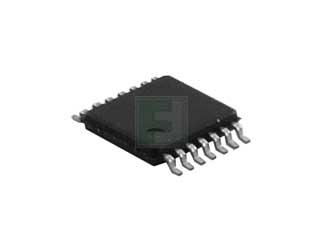
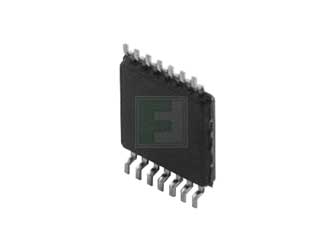

Manufacturer Part #
MC74HC126ADTR2G
74HC Series 2 to 6 V 3 State Quad Noninverting Buffer - TSSOP-14
| | |||||||||||
| | |||||||||||
| Mfr. Name: | onsemi | ||||||||||
| Standard Pkg: | Product Variant Information section Available PackagingPackage Qty:2500 per Reel Package Style:TSSOP-14 Mounting Method:Surface Mount | ||||||||||
| Date Code: | |||||||||||

onsemi MC74HC126ADTR2G - Product Specification
Shipping Information:
ECCN:
PCN Information:
Part Status:
- https://futureelec.wufoo.com/forms/?formname=r8bzou01ws8brs&field12=NA&field16=en&field2=MC74HC126ADTR2G&field4=onsemi&field18=https://p1na.futureelectronics.com/p/semiconductors--logic--74-series--a-hc-t/mc74hc126adtr2g-onsemi-7489891

- https://futureelec.wufoo.com/forms/?formname=r8bzou01ws8brs&field12=NA&field16=en&field2=MC74HC126ADTR2G&field4=onsemi&field18=https://p1na.futureelectronics.com/p/semiconductors--logic--74-series--a-hc-t/mc74hc126adtr2g-onsemi-7489891

onsemi MC74HC126ADTR2G - Technical Attributes
| Logic Circuit: | Non-Inverting Buffer |
| Family: | A/HC/T/U |
| No of Functions / Channels: | 4 |
| Output Characteristics: | 3-ST |
| Supply Voltage-Nom: | 2V to 6V |
| No of Inputs: | 4 |
| Package Style: | TSSOP-14 |
| Mounting Method: | Surface Mount |
Features & Applications
The MC74HC125A and MC74HC126A are identical in pinout to the LS125 and LS126. The device inputs are compatible with standard CMOS outputs; with pullup resistors, they are compatible with LSTTL outputs.
The HC125A and HC126A noninverting buffers are designed to be used with 3-state memory address drivers, clock drivers, and other bus-oriented systems. The devices have four separate output enables that are active-low (HC125A) or active-high (HC126A).
Features:
- Output Drive Capability: 15 LSTTL Loads
- Outputs Directly Interface to CMOS, NMOS, and TTL
- Operating Voltage Range: 2.0 to 6.0 V
- Low Input Current: 1.0 µA
- High Noise Immunity Characteristic of CMOS Devices
- In Compliance with the JEDEC Standard No. 7A Requirements
- Chip Complexity: 72 FETs or 18 Equivalent Gates
- Pb−Free Packages are Available
Available Packaging
Package Qty:
2500 per Reel
Package Style:
TSSOP-14
Mounting Method:
Surface Mount